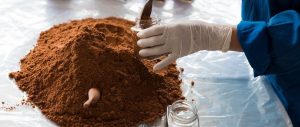

A customer asks about a coating delivered last month. Your team kept a sample, but the container is not where anyone remembers leaving it. A second jar carries the same product name. Someone thinks one was taken before the final adjustment.
The problem is not simply finding a jar. It is finding the right evidence and knowing what happened to it.
A retained coatings sample register connects a physical sample to its production history, current location, and subsequent use. For a business that already retains samples under an approved procedure, this is a practical way to make those samples retrievable rather than merely present.
Start with what the sample represents
A product name is not a sample identity. Several batches can share one name, and one batch can produce samples at different stages.
Give each retained sample a unique identifier linked to the batch, collection date, process stage, and applicable sampling instruction. Distinguish a pre-adjustment sample from a final-production sample. If several containers belong to one sampling event, identify each container or define their relationship clearly.
ASTM D3925 addresses representative sampling of liquid paints and related pigmented coatings. Its published scope does not cover every coating material. A well-organized register cannot make a poorly selected sample representative; sampling methods belong in the applicable approved procedure.
Keep the register connected to your record chain from pigment lot to finished coatings batch. Do not duplicate the formula and every material addition in another editable spreadsheet.
Build one register with usable fields
Use the following fields as an operational starting point, adapted by the person responsible for your quality process:
| Field | What it should answer |
|---|---|
| Sample and container IDs | Which exact physical item is this? |
| Batch and product IDs | Which production record does it represent? |
| Collection event | When, by whom, and at which process stage was it collected? |
| Procedure reference | Which sampling instruction and revision applied? |
| Current location | Which approved area, cabinet, shelf, and position holds it? |
| Custody and use history | Who moved, opened, tested, or returned it, and when? |
| Review status | Is it available, checked out, missing, consumed, or awaiting assessment? |
| Retention decision | Which policy controls review and eventual disposition? |
| Linked records | Where are the associated results, investigation, or disposal authorization? |
Use your own controlled identifiers. A location such as “lab” is less useful than a designated cabinet and shelf. A location code should identify an approved storage position, not invent a new storage arrangement.
Link the register from the relevant coatings batch records so retrieval works in both directions. Someone holding the container should find its history; someone holding the batch record should find the container.
Separate location from suitability
“On shelf” says where a sample is. It does not prove that the sample is suitable for a particular investigation.
Preserve observations about damaged identification, uncertain handling, an unexpected opening, or other departures from the approved procedure. Flag them for the authorized reviewer rather than silently marking the sample available.
OSHA’s safety-data-sheet requirements place handling and storage information in Section 7. Sample storage and handling must follow applicable requirements, the relevant SDS, and approved site procedures. This register is not a chemical-storage, labeling, sampling, or disposal instruction.
Do not prescribe one container type, storage temperature, sample quantity, or retention period for every coating. Have qualified personnel define those requirements for the materials, tests, customer obligations, and rules involved.
Record movement when it happens
A register becomes unreliable when a sample leaves storage but its row does not change.
Use a short movement entry: sample ID, person, time, origin, destination, purpose, and related work reference. Record the return as another event. Keep the earlier entry rather than replacing it with the latest location.
For example, in a fictional coatings workshop, sample RT-042-B belongs to the final stage of batch CO-042. A reviewer transfers it from its approved storage position to an authorized testing area for investigation INV-018. The register records the transfer and points to the test record. After review, it records the sample’s return and any relevant change in condition or remaining quantity.
A pre-adjustment sample from that batch retains its own identity. The two do not become interchangeable because they share a batch number. The coatings correction-record guide explains why the sequence before and after an adjustment needs to remain visible.
Test retrieval before a complaint arrives
Choose one retained sample and ask a trained colleague who did not store it to use the register. They should follow normal access and handling rules; the test does not require opening the container.
Ask them to establish:
- whether the physical identifier matches the register;
- which batch and production stage the sample represents;
- whether the recorded location matches its actual location;
- whether movements or uses remain unexplained;
- who decides whether it is suitable for the proposed review.
Record missing links, not just the time spent searching. A quick retrieval of the wrong sample is not a successful test.
Repair the earliest broken step. If location changes are missing, improve the movement handoff. If stage information is unclear, fix identification at collection. Adding another end-of-month spreadsheet rarely solves a missing point-of-use entry.
Close the record without erasing its history
A sample may eventually be consumed, disposed of, or otherwise unavailable under the approved process. Record the actual outcome, date, responsible person, and authorization or supporting reference.
Do not delete the row. Future batch traceability questions may still require knowing that the sample existed, how it was used, and why it is no longer available. A review date is a prompt for a decision, not automatic permission to discard anything.
Frequently asked questions
Can the customer approval sample replace a retained production sample?
Do not assume so. An approval sample may represent a trial formula or a different production stage. Its role and suitability must be established under the applicable procedure.
Can a photograph replace the physical sample?
A photograph can support identification and condition notes, but it cannot perform the physical tests a sample might be retained for. Keep its purpose explicit.
What if the container code and register disagree?
Flag the discrepancy and refer it for review. Do not relabel from memory or choose whichever record seems more convenient; preserve the evidence used to resolve the identity.
Do we need specialist software?
Not necessarily. A controlled shared register can work if identifiers, access, changes, and movement entries are dependable. Test retrieval before adding tools.
Practical takeaway
Start with one retained sample. Confirm its identity, sample location, process stage, and sample history without relying on the person who stored it. Fix the first missing connection, then apply the same check across the register.